The Standard
Labeling & encoding
How to put a UTID on a rapid test so any iaX reader — and any person — can identify the kit. This page defines the full-length UTID string, the two supported 2D symbologies, the sizes that read reliably, and where the label goes on the kit.
Anatomy of a full UTID string
A UTID sticker encodes a single, all-digit string: an optional U sentinel, then the mandatory 7-digit identity (this is what the public catalog lists and what a reader matches to a detection profile), then an optional, manufacturer-defined numeric suffix for the manufacturer’s own traceability — a manufacturing date and serial (V-MMM-TTT-YYMMDD-XXXX), or any numeric scheme they choose. The reader uses only the first seven digits to identify the kit and records the rest verbatim — it does not interpret the suffix.
Everything in the symbol is digits (plus the optional leading U). No letters, no +, no URLs — a reader ignores anything that isn’t this shape.
The production suffix (manufacturer-defined)
After the 7-digit identity, a manufacturer may append a numeric suffix for its own traceability — a manufacturing date and serial, or any numeric scheme it chooses. The layout is up to the manufacturer; the iaX reader records the digits with the result but does not interpret them, and selects the profile on the first seven digits only. The recommended form is V-MMM-TTT-YYMMDD-XXXX — a YYMMDD date and a serial — shown below; it is a recommendation, not a required format:
| Field | Position | Digits | Format | Example |
|---|---|---|---|---|
| Identity | 1–7 | 7 | V MMM TTT | 1014071 |
| Manufacturing date | 8–13 | 6 | YYMMDD | 260615 |
| Serial (XXXX) | 14–17 | 4 | 0000–9999 | 0042 |
Identity only (sentinelled)
U1014071
1-014-071
Identity + date
U1014071260615
1-014-071 · MFG 2026-06-15
Full string
U10140712606150042
1-014-071 · MFG 2026-06-15 · SN 0042
Reader-enforced facts
The whole payload is numeric (optionally a single leading U), 7–34 digits, and the first 7 digits are the identity. A nativealphanumeric lot or serial code must stay in the manufacturer’s own barcode — the UTID payload is digits only, so a UTID with letters will not be recognised.
iaX readers select the detection profile from the 7-digit identity and record the full digit string verbatim with every result. They do not interpret anything after the first seven digits — the suffix is the manufacturer’s own traceability data, carried through to the record as-is.
How an iaX reader validates a UTID
A cassette usually carries several symbols — the manufacturer’s own DataMatrix or QR, a GS1 element string, sometimes an IFU URL — and the UTID sticker sits alongside them. So the reader does not “scrape” digits from whatever it sees; it accepts a symbol as a UTID only when the whole payload matches the UTID shape. These are reader-enforced rules, not style guidance:
New stickers should carry the U sentinel: it costs one byte and makes the sticker unambiguously a UTID rather than a look-alike number. Bare-numeric stickers already in the field keep working.
Supported symbologies
iaX readers decode two 2D matrix symbologies, and the full digit string above fits comfortably in either. Linear (1D) barcodes are not used for the on-kit UTID — they are too wide and too low-density for a cassette.
DataMatrix (ECC 200)
Preferred- Rectangular format preferred (e.g. 8×32) — fits the narrow label strip on a cassette.
- Highest data density in the smallest area.
- ECC-200 error correction survives print wear.
- The iaX decode pipeline is tuned for it.
QR Code (Model 2)
Supported- Decoded by the same iaX pipeline.
- Use when the label area is larger.
- Good for a human phone-scan.
- Carries the identical U + digit payload.
Sizes & print quality
These are the reading-reliability minimums. When in doubt, print bigger, darker and matte.
| Parameter | DataMatrix (preferred, iaX-read) | QR (optional) |
|---|---|---|
| Format / shape | Rectangular preferred — 8×32 modules for a full ~20-digit UTID (identity-only fits 8×18); square (e.g. 16×16) also decodes | Square (Model 2) |
| Module (cell) size | ≥ 0.38 mm (0.40–0.50 mm recommended) | ≥ 0.33 mm |
| Printed symbol size | ≈ 4 × 16 mm rectangular for the full string (identity-only ≈ 4 × 8 mm) | ≥ 15 × 15 mm |
| Quiet zone (clear border) | ≥ 1 module (2 recommended), all 4 sides | 4 modules, all 4 sides |
| Print resolution | ≥ 600 dpi | ≥ 600 dpi |
| Contrast | Dark modules on light background, ≥ 70% print contrast | Same |
| Finish | Matte / non-glossy (avoids glare under the iaX LED) | Matte / non-glossy |
Placement on the kit
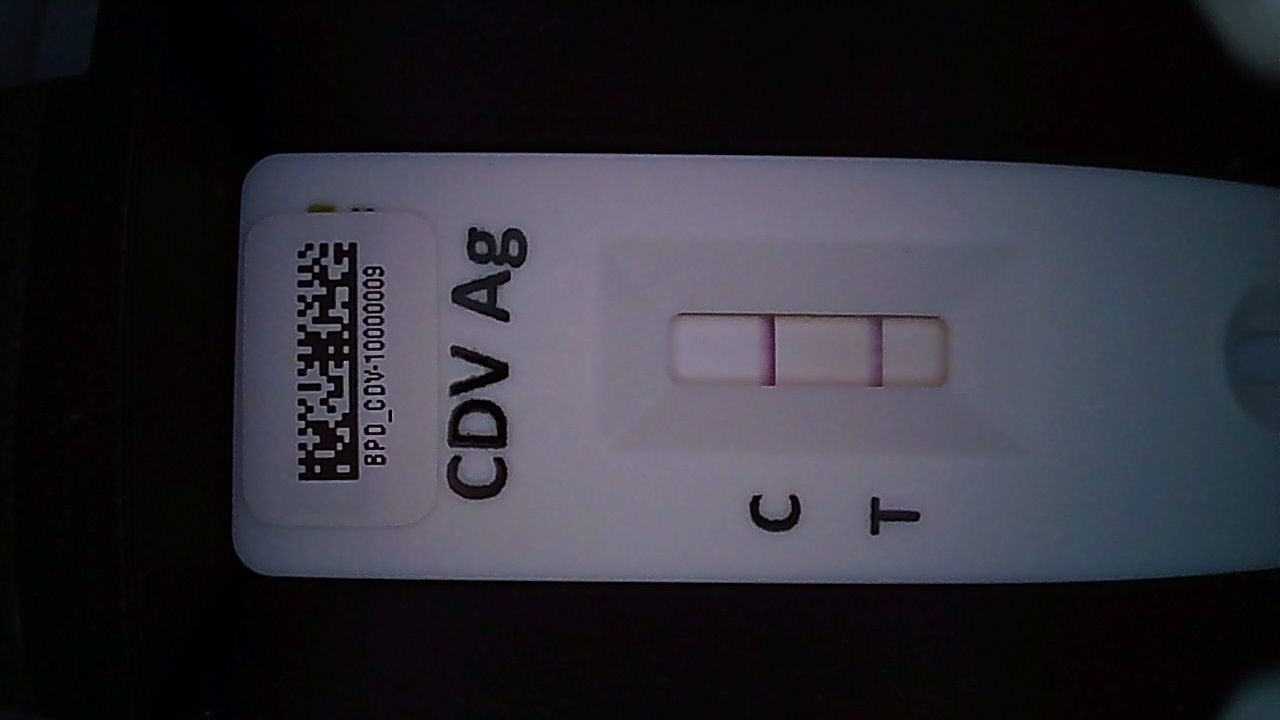
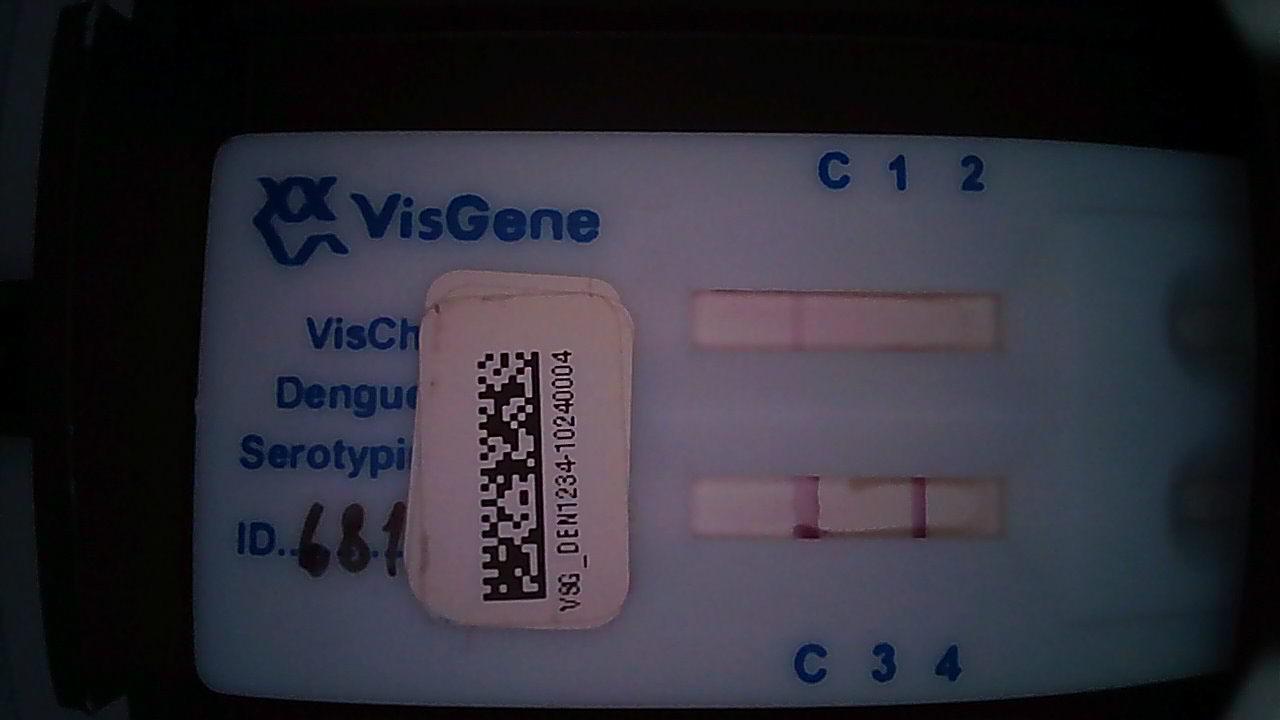
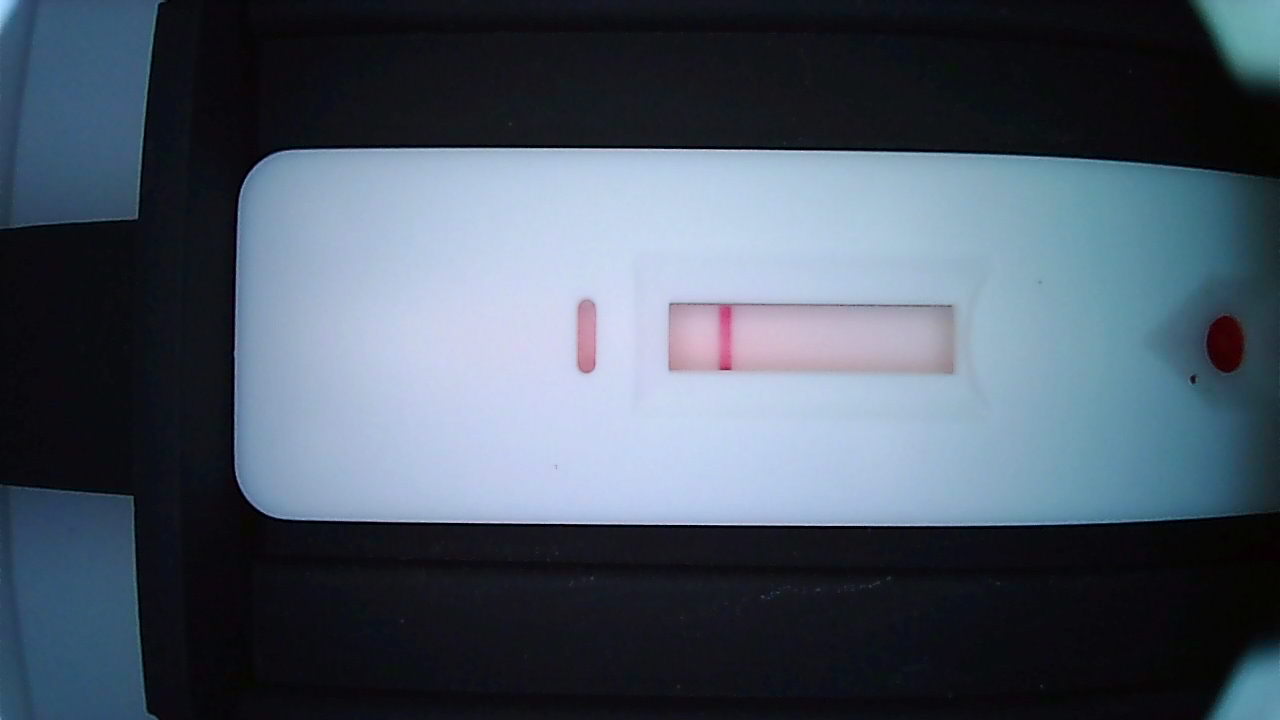
Put the symbol where the iaX camera can see it when the kit is seated, and where it never competes with the chemistry. The kits below — imaged by an iaX reader — show it in practice: two real cassettes already carrying a UTID DataMatrix, and one with the recommended placement illustrated.
The label block, up close
A complete on-kit UTID label: the machine-readable symbol, the human-readable string for manual entry and verification, and the exact encoded payload.
MFG 2026-06-15
SN 0042
payload: U10140712606150042
The DataMatrix and QR symbols on this page are illustrative renderings, not scan-decodable codes.
Need a manufacturer or test-type code?
You need the 7-digit identity before you can print a label. Read the standard for how the code is structured, then request your code.
Request a UTID code →